NEW DELHI: A recent statement by US Ambassador Sergio Gor in Srinagar describing Jammu and Kashmir as an “important part of India” has triggered a sharp reaction from Pakistan and drawn attention to the changing diplomatic dynamics surrounding the Kashmir issue.
Gor made the remarks during his August 19 visit to Srinagar, where he also pointed to improvements in the security situation in Jammu and Kashmir and indicated that Washington could reconsider its travel advisory for the region. Pakistan responded by summoning the US envoy and formally objecting to the remarks.

The statement is significant because Washington has traditionally maintained a cautious position on Kashmir, generally calling for dialogue between India and Pakistan and a peaceful resolution of outstanding issues. While an ambassador’s remarks do not automatically amount to a formal change in US policy, the choice of words and the location in which they were delivered have attracted considerable attention.
Gor’s comments also come against the backdrop of improving security conditions and expanding economic and tourism activity in Jammu and Kashmir. A possible easing of the US travel advisory would indicate that Washington increasingly sees the region not only through the prism of security concerns but also as a destination with growing prospects for tourism, investment and normal economic activity.
The development needs to be viewed in the broader context of India-US relations. The partnership between the two countries has expanded well beyond traditional areas such as trade and defence. Cooperation in the Indo-Pacific, technology, energy, supply chains and maritime security has made India increasingly important to Washington’s strategic calculations.
At the same time, differences over trade, tariffs and other economic issues remain. Yet these disagreements have not fundamentally altered the broader strategic significance of the India-US relationship.
India has also continued to pursue a policy of strategic autonomy, maintaining important ties with Russia, Europe, West Asia and other major powers while strengthening its partnership with the United States. Its growing economy, large consumer market, technological capabilities, strategic location and role in the Indo-Pacific have enhanced its importance in the evolving global order.
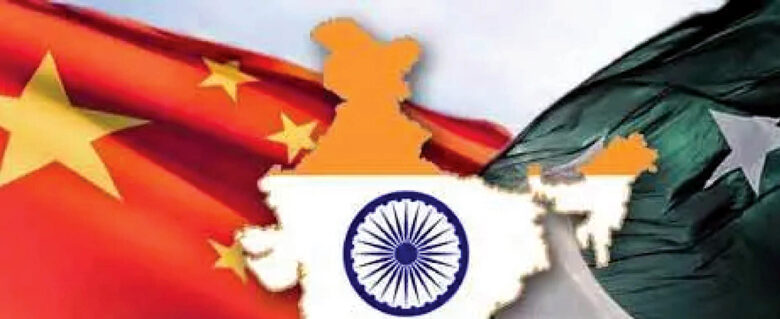
For Pakistan, however, the ambassador’s statement represents an uncomfortable development. Islamabad has consistently sought to portray Kashmir as an international dispute and has pushed for greater international involvement in the issue. Pakistan rejected Gor’s remarks and reiterated its position that Jammu and Kashmir remains a disputed territory whose final status has yet to be determined.

The challenge for Pakistan is that the priorities of major global powers have increasingly expanded beyond the Kashmir question. Terrorism, economic stability, China’s growing influence, West Asian conflicts, maritime security, energy supplies and global supply chains now dominate much of the international strategic agenda.
Against this backdrop, Islamabad’s efforts to keep Kashmir at the centre of international diplomacy face greater limitations. India, meanwhile, has consistently maintained that issues concerning Jammu and Kashmir are matters of its sovereignty and should not be internationalised.
Gor’s Srinagar visit itself carries symbolic significance. His engagement with the region’s elected leadership and his positive assessment of security and economic prospects provide a contrast to narratives that portray Jammu and Kashmir exclusively as a zone of conflict and instability.
However, India would also need to avoid interpreting the latest remarks as evidence of a complete transformation in Washington’s Kashmir policy. US foreign policy remains driven by strategic interests, and Washington is likely to continue balancing its relationships across South Asia. Pakistan retains relevance for the United States on issues including counterterrorism and regional security.
The larger significance of the episode, therefore, lies less in a formal policy shift and more in the changing diplomatic environment around India. Global powers increasingly view India as an important pillar of the emerging international order, and this growing strategic weight inevitably influences how issues concerning the country are viewed internationally.
The Srinagar statement can consequently be seen as an important signal rather than a definitive policy reversal. For India, it reflects growing international confidence in the region’s improving security and economic prospects. For Pakistan, it underlines the difficulties of keeping Kashmir at the centre of global diplomacy through traditional internationalisation efforts.
Ultimately, lasting peace in Jammu and Kashmir will depend not merely on diplomatic statements but on sustained security, development, democratic participation, economic opportunity and an end to cross-border terrorism. The latest US remarks nevertheless offer a glimpse into a changing geopolitical landscape in which India’s position appears to be receiving greater diplomatic weight, while Pakistan faces a more challenging environment in advancing its Kashmir narrative.